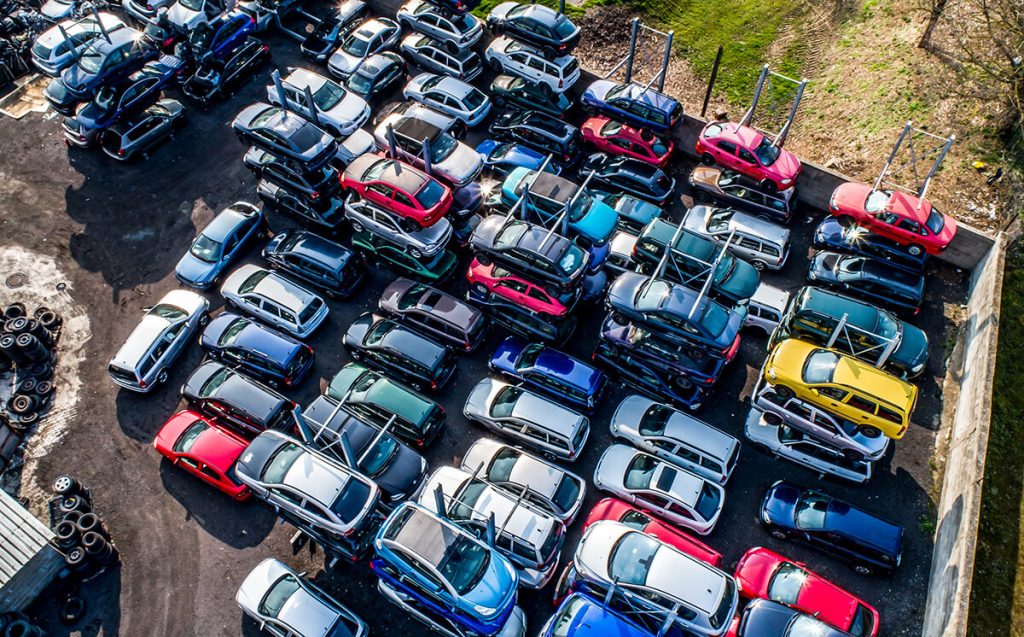
When people picture a scrapped car, they usually imagine it dropped straight into a giant crusher within minutes of arriving at the yard. That is not how it works. Recyclers pull out engines, alternators, and other working components first, because a whole part resold to a garage is worth far more than the same part shredded into scrap metal. The crusher is the last stop, not the first. Once you understand what happens to old cars after they leave your driveway, the process looks less like demolition and more like a structured teardown with a clear order of operations. Here is what it looks like from the inside, at a licensed Toronto scrap car recycler like ours.
What Happens to a Car When It Is Scrapped
The process starts the moment you accept an offer from a recycler. A tow truck picks up the vehicle, and you sign over the ownership permit while keeping your licence plates to transfer or cancel through your provincial registry. Before the car is touched mechanically, the yard checks the VIN against the paperwork to confirm ownership and rule out liens or theft. Technicians then drain the fuel, oil, coolant, and other fluids on a sealed pad so nothing leaks into the ground. Batteries come out next, along with mercury switches in older models, since these need separate handling under provincial rules. Only once the vehicle is fully drained and cleared of hazardous materials does it move toward parts removal.
Scrap Car Parts Recycling
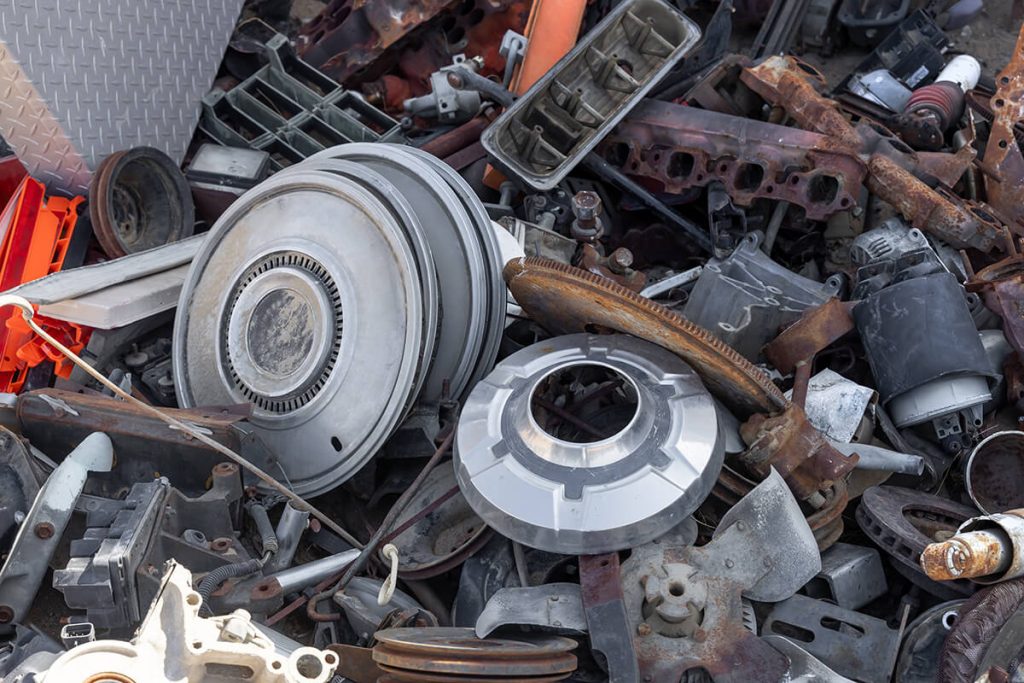
Before a vehicle shell is compacted, technicians pull anything with resale value. This is the stage where certain components hold far more resale value than others, and where a car with usable parts brings a better payout than one sold purely for scrap weight.
Commonly salvaged components include:
- Engines and transmissions with low mileage or strong compression
- Alternators, starters, and power steering assemblies
- Body panels, doors, and hoods in good condition
- Headlights, mirrors, and other electrical assemblies
- Catalytic converters, cut out and logged separately for their precious metal content
- Wheels and tires with usable tread
Every part gets cleaned, tagged, and entered into inventory so shops and drivers can buy it later instead of paying full price for new. Parts with no demand move on to the shredder with the stripped shell.
What Happens to Cars After They Are Crushed
Once the shell is empty, it gets flattened into a compact slab so more vehicles fit on a single trailer. From there, it travels to a regional shredding facility, where a hammer mill tears the metal into fist-sized pieces in under a minute. Magnets pull the ferrous steel from the mix, while separate equipment sorts aluminum, copper, and other metals from what remains. The recovered steel is usually sold to an electric arc furnace mill, melted down, and rolled into new rebar, beams, or sheet steel. Almost nothing that comes out resembles the car it used to be, though little of the metal goes to waste.
How Much of a Car Can Be Recycled?
A typical passenger vehicle is mostly recoverable, though not entirely. Roughly three-quarters of the total weight is metal that gets fully recycled through the shredding process above. The rest is a mix of plastics, foam, glass, and rubber that current technology cannot separate economically.
| Material Recovered | Share of Vehicle Weight | Where It Ends Up |
| Steel and iron | About 65 to 70 percent | Melted and rolled into new steel products |
| Aluminum, copper, and other metals | About 5 to 8 percent | Sorted and resold to secondary smelters |
| Plastics, foam, glass, and residue | About 15 to 25 percent | Landfilled as shredder residue |
About 15 to 25 percent of a scrapped car’s weight, or roughly 225 to 375 kilograms in an average 1,500-kilogram vehicle, ends up as shredder residue that cannot currently be separated into reusable material.1
What Do Junkyards Do With Cars?
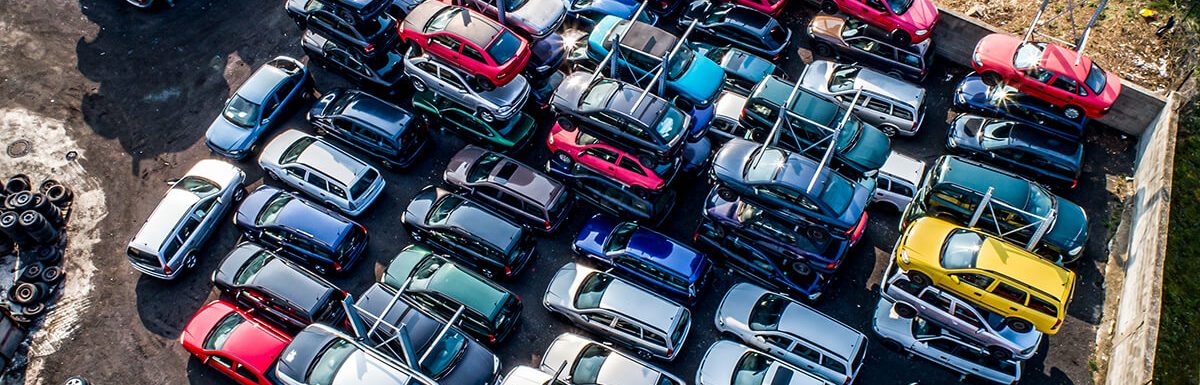
A junkyard, or more accurately an auto recycler, is not a storage lot for wrecked vehicles. A properly run auto scrap yard in Toronto works to get the most value from every car that arrives before anything gets destroyed.
Typical operations include:
- Verifying ownership and clearing liens before accepting a vehicle
- Draining and storing hazardous fluids and batteries safely
- Removing and cataloguing resalable parts
- Cutting out catalytic converters under strict rules to deter theft
- Compacting and shipping stripped shells to a shredding plant
- Selling recovered scrap steel and other metals to mills and smelters
Newer, higher demand vehicles often move through this process quickly, sometimes within 48 to 72 hours of arriving, while older cars with less resale potential sit longer in holding areas.2
Frequently Asked Questions
How to Get the Most Money When Scrapping a Car?
Get quotes from more than one recycler, since offers vary with current scrap metal prices and demand for your make and model. A car with an intact engine, converter, and undamaged panels fetches more than one that is missing major components.
Is It Better to Scrap or Sell My Old Car?
If the car still runs and passes a safety inspection, selling it privately or trading it in usually brings a higher return. Once repairs cost more than the car is worth, scrapping becomes the more practical option.
How to Check Scrap Value of a Car?
Scrap value comes down to your vehicle’s weight, current metal prices, and which parts are usable. Most Toronto recyclers give a quote over the phone once you share the year, make, and model.
How Much Can I Scrap My Old Car For?
Prices vary with the vehicle and market conditions, but most scrap cars in Ontario bring in anywhere from a couple hundred to over a thousand dollars. Larger vehicles with valuable components generally sell for more.
Final Thoughts
A scrapped car goes through more steps than most people realize before it becomes raw material again. Parts get a second life in other vehicles, metals get rebuilt into new products, and only a small share ends up in a landfill. Knowing what to expect turns the process into a straightforward way of recovering value from something you are done using.
How We Can Help
We handle every step for Toronto drivers, from a fair quote based on current scrap prices to free towing and the paperwork needed to close out your registration. Visit us today for a free, no-obligation quote and find out what your scrapped car is worth.
References
- Vijayan SK, Kibria MA and Bhattacharya S (2022) A Study on Pyrolysis of Pretreated Automotive Shredder Residue—Thermochemical Calculations and Experimental Work. Front. Sustain. 3:811226. doi: 10.3389/frsus.2022.811226
- Ministry of the Environment, Conservation and Parks. *Confirmation of Registration: Greater Napanee Recycling Limited*. 23 Jan. 2019.