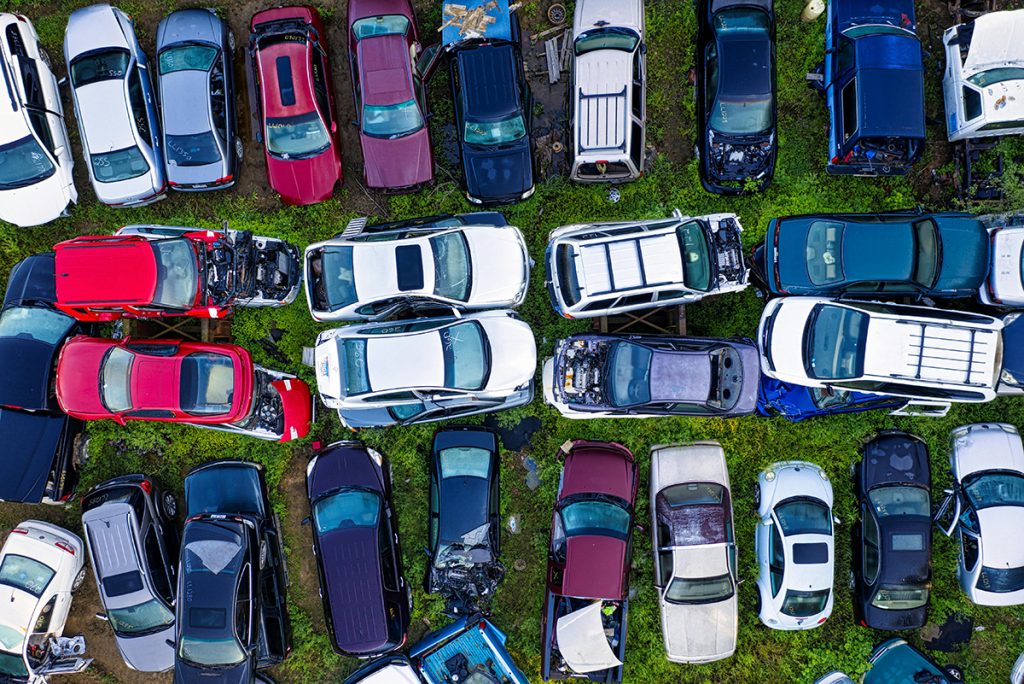
Ontario retires somewhere between 550,000 and 600,000 vehicles each year, and plenty of them carry a permanent mark that limits what an owner can do next. The salvage title meaning comes down to one fact: a government body has flagged the vehicle as a serious write-off, and that record stays attached to it for life. Getting a handle on the label pays off before money changes hands, whether the plan is to fix the car, sell it, or hand it to a scrap car removal company for recycling.
What Does a Salvage Title Mean in Ontario?
Ontario runs a Mandatory Vehicle Branding Program under the Highway Traffic Act, in place since 31 March 2003.1 Every vehicle carries a brand recorded against its Vehicle Identification Number inside the Ministry of Transportation system, and four categories exist: None, Salvage, Rebuilt, and Irreparable. A salvage brand marks a written-off total loss that can still be repaired, though the car must stay off the road until it passes inspection. The record surfaces on the permit, the Used Vehicle Information Package, and any abstract a buyer pulls.
Why Would a Car Have a Salvage Title?
Most salvage brands trace back to an insurance write-off. Under Ontario Regulation 376/02, a vehicle becomes a total loss once the estimated repair cost passes the gap between its pre-incident market value and its remaining salvage value. Collisions, fire, and flooding sit among the usual triggers.2 Knowing what salvage reported means helps here too, since the phrase simply signals that an insurer or authorized body logged the car as a total loss rather than one with a clean history. Not every write-off qualifies; some older cars get cut loose for economic reasons alone and never meet the structural test.
What’s the Difference Between a Salvage Title and a Rebuilt Title in Ontario?
The two labels sit at different stages of the same path. A salvage vehicle is a repairable total loss that cannot legally touch a public road. Once someone repairs it and it clears a structural alignment inspection, the brand upgrades to Rebuilt, and only then can it be registered and plated. An Irreparable vehicle falls outside all of this, restricted to parts harvesting or scrap and barred from the road forever. One detail trips people up: the rebuilt brand never disappears, following the car across every future permit and package.
Can You Drive or Insure a Car With a Salvage Title?
No. A salvage-branded car stays unfit for the road, so moving it calls for a tow truck or flatbed until a rebuild and reinspection are finished. Insurance gets thorny as well. The Financial Services Regulatory Authority of Ontario oversees rates, yet insurers face no obligation to sell collision or comprehensive coverage on a rebuilt car. Some decline outright, others raise premiums or ask for repeat inspections. An owner eyeing a rebuilt vehicle should lock in coverage terms in writing with a broker before any money moves.
Is It Bad to Buy a Salvage Title Car?
The answer hinges on the paperwork behind the car. When buying a car with a salvage title, the real danger is hidden structural or airbag damage that a quick glance never reveals. Registered dealers must follow OMVIC rules and put mandatory disclosures in writing on the contract, including any salvage, rebuilt, or irreparable classification. Private sales run differently and fall under buyer beware.
A few checks protect you before signing:
- Pull a UVIP or a CARFAX Canada report to confirm the branding history across North America.
- Ask a rebuilt seller for the original structural inspection records.
- Have an independent mechanic who knows frame work go over the car.
Is It Worth Repairing a Salvage Title Car, or Is Scrapping the Better Option?
Repair math rarely favours common cars. A rebuilt brand carries a permanent market discount of 20 to 50 percent, and the structural inspection alone often runs past $250 before parts or towing enter the picture. When the frame needs pulling, welding of structural sections, or a firewall swap, scrapping usually wins, and routing the car through proper scrap car recycling recovers most of its weight instead of leaving it to rot. Rebuilding earns its keep on rare or high-value vehicles, or where the damage stays small and easy to verify with used parts. Anyone wondering how to salvage a car the legal way should expect photos of the damage, itemized invoices, and a two-stage inspection at a DriveON centre.
| Factor | Repair and Rebuild | Scrap |
|---|---|---|
| Road legal after | Yes, once inspected | No |
| Typical cost | $250+ inspection plus parts | None |
| Financial return | Often negative | $100 to $1,000+ |
| Risk | May fail inspection | Predictable return |
Does a Salvage Title Lower Your Scrap Car’s Value?
Not by much. A recycler pays by metal weight and parts demand, so the brand itself barely touches your scrap car’s value. Standard payouts land between $100 and $1,000 or more depending on steel pricing. A stripped car still qualifies; it simply returns less because fewer components and less metal remain. Since around 83 to 86 percent of a vehicle’s weight gets reused, the salvage label has little to do with what a yard will hand over.
Do You Need Special Paperwork to Scrap a Salvage-Titled Vehicle?
Scrapping counts as a transfer of ownership, so the documents carry weight. To sell salvage-titled car units to a recycler cleanly, work through these steps:
- Locate the green ownership permit and sign the vehicle portion on the left.
- Tear off and keep the plate portion on the right.
- Remove both licence plates before the tow arrives.
- Get a Bill of Sale listing the 17-digit VIN, price, and date.
- Confirm the recycler’s EASR registration.
- Notify ServiceOntario within six days and cancel the insurance.
Skip the ServiceOntario step and your name stays on the VIN, along with any fines or fees that follow.
Get a quote from us today and turn your branded car into cash.
References
- Mandatory Vehicle Branding program. (2025, April 1). ontario.ca. https://www.ontario.ca/page/mandatory-vehicle-branding-program
- O. Reg. 376/02 CLASSIFICATION OF VEHICLES AS IRREPARABLE, SALVAGE AND REBUILT | Ontario.ca. (n.d.). https://www.ontario.ca/laws/regulation/020376