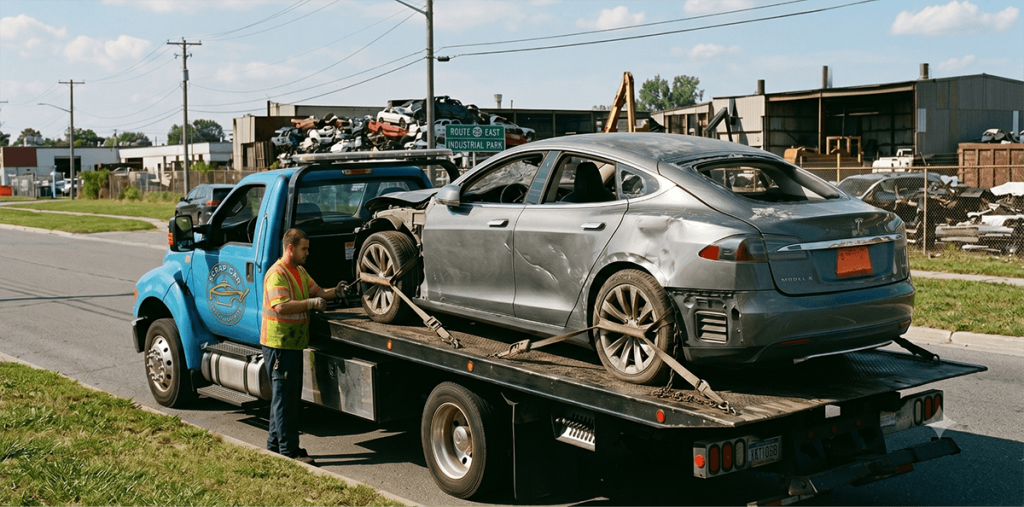

Catalytic converter theft leaves a vehicle loud, unsafe, and expensive to repair. For many Canadian drivers, the choice comes down to repair, an insurance claim, or salvage. The best next step depends on the vehicle’s value, the repair estimate, the insurance deductible, and any extra damage to sensors, wiring, or exhaust parts.
Why Catalytic Converter Theft is on The Rise
Why are catalytic converters stolen? The main reason is metal value. Catalytic converters contain platinum, palladium, and rhodium, which help convert harmful exhaust gases into less toxic emissions. These metals have strong resale value, and that has made converters a common target.
SUVs, pickups, vans, and other high-clearance vehicles are often hit because a thief can slide underneath and cut the converter out quickly. The stolen part can then be processed for the precious metals inside the ceramic core.
Provincial rules have tightened the resale market. Manitoba’s Scrap Metal Act rules banned cash transactions for restricted items such as catalytic converters and required dealers to record identification and transaction details for two years.
How To Tell if a Catalytic Converter is Stolen?
The signs usually appear as soon as you start the engine:
- A sudden roaring or sputtering exhaust noise that gets worse during acceleration
- A check engine light caused by oxygen sensor readings that no longer match normal emissions flow
- A strong exhaust smell near or inside the cabin
- Sluggish performance, poor fuel economy, or low power mode
- Visible gaps, cut pipes, or dangling wires under the vehicle
Do not keep the engine running during inspection. A missing converter leaves the exhaust open beneath the cabin, which can allow carbon monoxide and other fumes to collect.
What Happens If Your Catalytic Converter is Stolen?
A stolen converter changes the vehicle mechanically and legally. The engine may start, but the exhaust system is incomplete. Noise and emissions rise, while the onboard diagnostic system may adjust fuel settings in ways that reduce performance.
Driving without the converter is illegal on public roads in Canada. In Ontario, the motor vehicle emissions regulation makes it an offence to operate, or permit operation of, a vehicle manufactured with a catalytic converter if that converter has been removed, bypassed, or made non-functional.
That creates trouble before repairs as well. A temporary straight pipe can lead to fines, failed inspections, or registration problems. If the vehicle needs an Ontario safety inspection, a missing converter can create another barrier.
What to Do if a Catalytic Converter is Stolen
Start with safety and documentation:
- Turn the vehicle off and avoid idling near buildings, garages, or passengers.
- Take clear photos of the undercarriage, cut pipes, missing parts, and damaged wiring.
- Report the theft to local police and get a file number.
- Call your insurer before authorizing repairs if you carry comprehensive or specified perils coverage.
- Ask a repair shop for an itemized estimate that separates parts, labour, diagnostics, welding, sensors, and brackets.
- Keep receipts for any aftermarket exhaust parts already installed.
The police file number can be required before an equipment theft claim is processed. Photos also help if the shop finds oxygen sensor damage, cut wiring, broken hangers, or additional exhaust damage.
Repair, Insurance, Or Scrap The Car?
Start with the numbers. A replacement converter can cost hundreds to more than a thousand dollars before labour. The average total repair for a light passenger vehicle is around $1,800, while larger vehicles and motorhomes can reach several thousand dollars.
OEM parts usually fit the vehicle’s systems best. Certified aftermarket parts may cost less, but they must meet emissions rules and work with onboard diagnostics.
| Vehicle Situation | Better Option | Reason |
| Newer vehicle with strong resale value | Repair through insurance | The repair cost is usually small compared with vehicle value |
| Mid-value vehicle with a high deductible | Compare claim and cash repair | A claim may save little after deductible and depreciation |
| Older vehicle with low market value | Consider write off or salvage | Repair may approach or exceed practical value |
Comprehensive or specified perils coverage may pay for catalytic converter theft, but basic third-party liability will not. A deductible often applies. Some policies may also reduce payment for depreciation on older exhaust components.
When the repair bill is only slightly higher than the deductible, paying directly can be cleaner. When the bill reaches 70% to 80% of the vehicle’s actual cash value, an insurer may treat it as a total loss.
Can You Scrap A Car Without A Catalytic Converter?
Yes, you can scrap a car without a catalytic converter, but expect a lower payout. Licensed recyclers price a vehicle by metal value, reusable components, weight, demand, and missing parts. A catalytic converter is one of the most valuable salvage components, so its absence reduces the offer.
Scrapping can still make financial sense when the car is older, already needs repairs, or has undercarriage damage from a rough theft. It can also be practical when parts are backordered, and rental costs are rising.
A licensed recycler should handle ownership paperwork properly and process the vehicle through responsible scrap car recycling, instead of treating it as loose metal.
How to Prevent Catalytic Converter Theft
After repair or replacement, thieves may return to a vehicle they already know. Reduce the risk with physical barriers and visible identification:
- Park in a garage, fenced area, bright lot, or spot with regular foot traffic.
- Position the vehicle close to a wall or curb to limit undercarriage access.
- Install a catalytic converter shield, cage, lock, or reinforced cover.
- Ask a mechanic to engrave the VIN on the converter and apply high-heat visible paint.
- Adjust alarm sensors so cutting vibrations trigger a response.
These steps slow thieves down. Visible marking also makes resale harder because legitimate buyers can identify the part.
Final Decision
Repair when the vehicle has strong value, available parts, and insurance coverage that leaves a reasonable cost. Use insurance when repair is clearly higher than the deductible, and the claim payout is worth the paperwork. Scrap the car when age, mileage, missing parts, and repair costs point to a poor return.
Need a fast local offer after converter theft? Get a quote from us today.