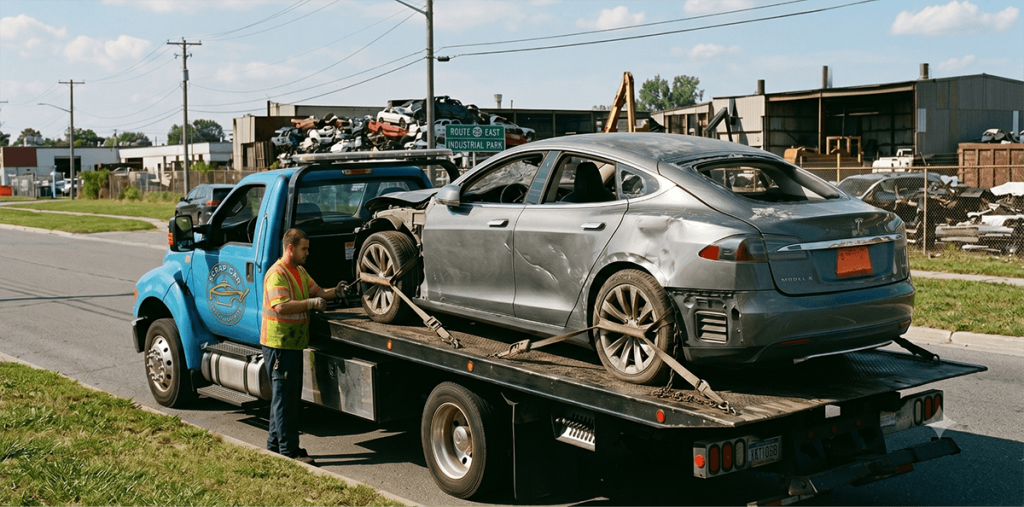
Canada retires about 1.6 million vehicles each year,1 and more end-of-life cars now carry high-voltage battery systems. In Toronto, that changes scrapping. A hybrid or EV can be sold for parts, metals, and battery recovery with the right buyer.
Can You Scrap An EV?
Yes, when the vehicle goes to a buyer who can manage electrified systems. A battery electric model contains power electronics, copper wiring, aluminum components, software-controlled modules, and a large traction pack. Crushing it without depowering creates shock and fire risk.
A qualified recycler checks the vehicle identity, damage history, battery condition, and pickup location before giving a final offer. That screening protects the owner, too, because Ontario still connects the car to the registered owner until the transfer is documented.
How To Scrap An Electric Vehicle
Start with the same basics used for any Ontario scrap sale. Find the green vehicle permit, confirm that the VIN matches the vehicle, remove personal items, and take off both licence plates before the tow leaves. The sale record should show the vehicle, buyer, date, and agreed amount.
If the vehicle has collision, fire, flood, or structural damage, Ontario branding rules may affect how it can be processed. A vehicle branded irreparable can be used for parts or scrap metal recovery, but it cannot return to the road. A salvage vehicle may be dismantled, sold for scrap, or rebuilt only after the required inspection process.
The federal zero-emission vehicle sales targets point to a wave of retired electrified vehicles. New zero-emission light-duty vehicle sales are targeted at 20% by 2026, 60% by 2030, and 100% by 2035.2
The Basics of Hybrid Car Recycling
A hybrid carries both traditional and electric vehicle risks. It may have engine oil, coolant, brake fluid, refrigerant, a catalytic converter, a 12-volt battery, and a high-voltage traction pack. Those parts can improve value, but they also require proper dismantling.
Never cut orange cables or open the battery case at home. High voltage direct current can cause severe injury, and damaged lithium-ion packs can produce fire, toxic gases, and chemical exposure. Trained dismantlers use insulated tools, lockout steps, service disconnect procedures, and battery storage controls.
What A Quote Usually Depends On
The scrap value of an electric car depends on condition, chemistry, and parts demand. Large nickel and cobalt-rich packs may carry stronger recovery value, while damaged packs can add costs. Battery state of health also affects whether a pack is reused, repurposed, or sent directly for material recovery.
Owners asking how much a hybrid car is worth as scrap should expect a model-specific answer. A hybrid may bring value from body weight, converter, wheels, electronics, engine parts, and battery modules. Local metal pricing, missing parts, and tow distance still affect the final number, so scrap car value can vary.
| Quote Factor | Possible Effect |
| Battery Condition | Reusable packs can raise value, while damaged packs may reduce the offer. |
| Vehicle Brand | Salvage and irreparable records limit resale pathways. |
| Parts Demand | Drive units, inverters, wheels, and converters may add value. |
| Metal Markets | Copper, aluminum, nickel, cobalt, and steel prices move frequently. |
| Recycler Capability | In-house EV handling can reduce outside costs. |
Paperwork And Pickup Preparation
Treat the administrative side seriously. Ontario vehicle owners need a clear transfer trail, especially when a car is towed away. A road-ready inspection checklist mindset can still help you record visible damage, missing parts, VIN details, and plate removal.
Before pickup:
- Gather the green vehicle permit and photo ID.
- Remove licence plates and personal items.
- Photograph the VIN, odometer, vehicle condition, and signed paperwork.
- Ask for a written bill of sale or pickup receipt.
- Report the ownership change within six days through ServiceOntario.
Choosing an EV Scrap Yard in Toronto
Choose a facility that can explain its battery process in plain language. The answer should cover depowering, dry storage, safe lifting, fluid removal, and downstream battery recycling. Vague answers create risk for the seller and the property where the tow takes place.
Good questions include:
- Can your team handle high-voltage systems on site?
- Will the battery stay intact during pickup?
- Where are traction batteries sent after removal?
- Do you provide written sale paperwork?
- Are your practices aligned with certified auto recycling standards?
What Happens To The Battery?
After removal, the pack is tested for state of health and state of charge. A healthier pack may be reused as a replacement component or repurposed for stationary energy storage. A degraded or damaged unit moves into specialized recycling.
Battery recycling can separate plastics, steel, copper, aluminum, and black mass. Hydrometallurgical processing can recover high value minerals such as lithium, nickel, cobalt, and manganese at far higher rates than older smelting methods. Some Ontario facilities already support this battery materials stream.
FAQs
Can You Scrap An Electric Car?
Yes. Electric cars can be scrapped, but they should go to a recycler that accepts high-voltage vehicles. The yard needs to know the make, model, battery condition, and whether the vehicle has collision, flood, or fire damage before pickup. Do not remove the battery yourself to make the sale easier.
Do Scrap Yards Take Electric Cars?
Some scrap yards take electric cars, while others refuse them because of battery handling risks. Ask before booking the tow. A suitable yard should be able to explain how the vehicle will be depowered, how the battery will be stored, and what paperwork you will receive after the sale.
Are Hybrid Cars Worth More As Scrap?
Hybrid cars can be worth more as scrap when key parts are still intact. A hybrid may have a catalytic converter, battery modules, electric drive parts, wheels, body panels, and electronics that add value. The final offer still depends on model demand, damage, battery condition, missing parts, and current metal prices.
Can You Scrap A Hybrid With A Dead Battery?
Yes. A dead hybrid battery does not automatically make the car worthless. The recycler can still assess the vehicle’s body weight, converter, wheels, electronics, engine parts, and any reusable components. Tell the buyer that the battery is dead before pickup so they can quote and handle the vehicle properly.
Is It Safe To Scrap An EV Battery?
It is safe when trained technicians handle it. It is not safe for an owner to cut cables, open the casing, remove modules, or store a damaged battery at home. High-voltage packs can create shock, fire, and chemical risks, especially after a collision, flood, or overheating event.
How Do You Dispose Of A Hybrid Car Battery In Ontario?
The safest option is to leave the battery inside the vehicle and sell the car to a recycler that handles hybrids. If the battery has already been removed, contact an auto recycler, dealer service department, or battery recovery program that can accept traction batteries. Do not place it in household waste or regular metal recycling.
Where Can I Recycle An Electric Car In Ontario?
Recycle it through an Ontario auto recycler that accepts EVs and provides proper sale records. Before booking, confirm that they handle high voltage systems, remove fluids, manage battery storage, and route traction batteries to an appropriate reuse or recycling stream.
Is It Worth Scrapping An Old Hybrid?
Often, yes. Scrapping can make sense when the hybrid needs repairs that cost more than its resale value, especially if the battery, converter, or major electronics are failing. Even an old non-running hybrid may still have value through parts, metals, wheels, and recoverable battery materials.
Conclusion
Scrapping a hybrid or EV in Toronto can be worthwhile when the vehicle goes to the right buyer. The quote may come from the body, wheels, electronics, catalytic converter, battery modules, copper, aluminum, and other recoverable parts. The safest result comes from leaving the high voltage system intact and letting trained dismantlers handle the battery.
Before pickup, prepare the permit, remove the plates, clear the vehicle, and keep a written record of the sale. Ask direct questions about EV handling, battery routing, and paperwork. A recycler that can answer clearly will usually make the process faster, safer, and easier to document.
Ready to scrap your hybrid or EV in Toronto? Get a quote from us today.
References
- Automotive Recyclers of Canada. (2024, January 25). Plastics from ELVs Study – Automotive Recyclers of Canada. https://autorecyclers.ca/plastics-from-elvs-study/
- Kumarage, N., Hewage, K., Wanniarachchi, S., & Sadiq, R. (2025). Canada’s transition to light-duty zero emission vehicles (ZEV): opportunities, challenges, and policy directions. Transportation Research Part a Policy and Practice, 199, 104611. https://doi.org/10.1016/j.tra.2025.104611